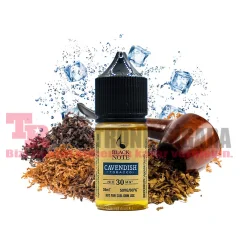
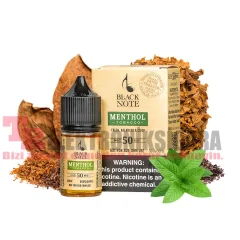
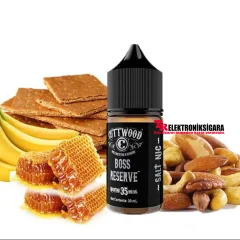
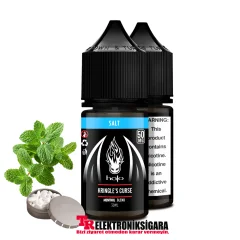
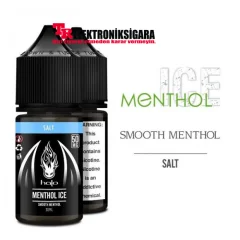
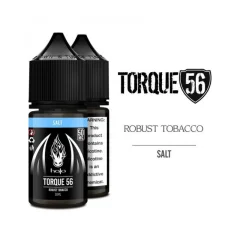
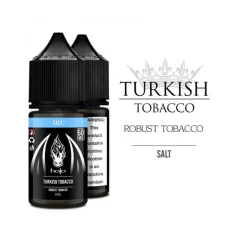
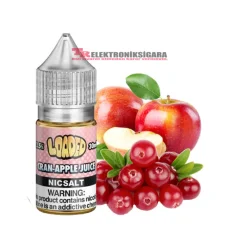
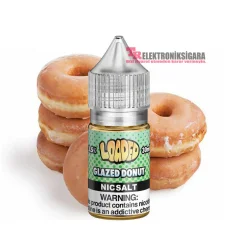
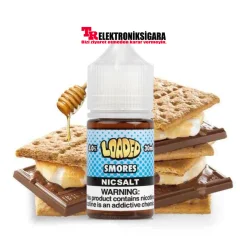
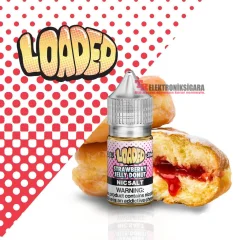
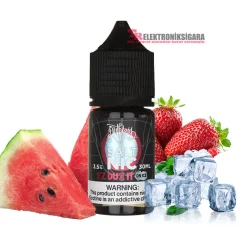
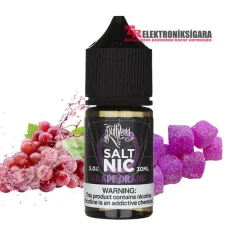
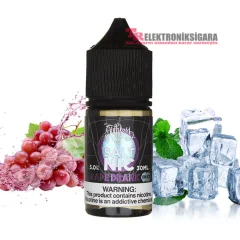
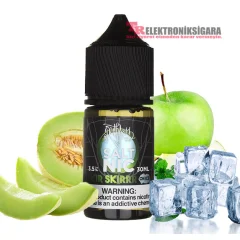
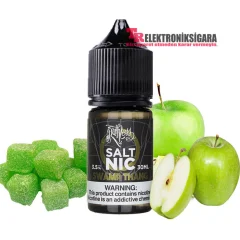
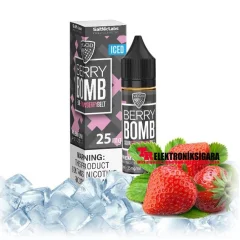
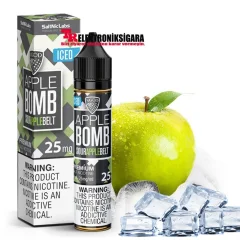
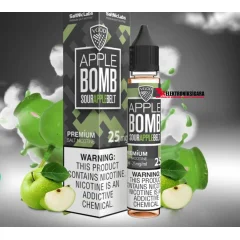
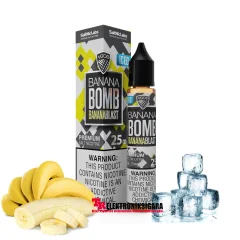
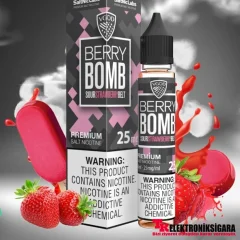
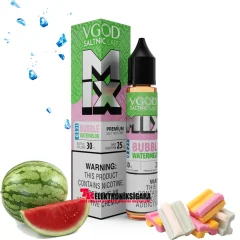
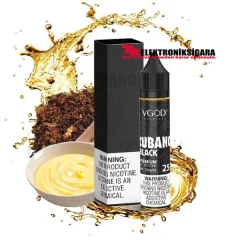
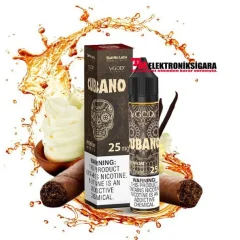
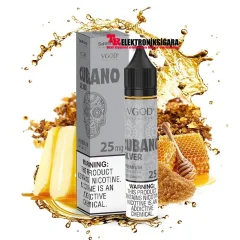
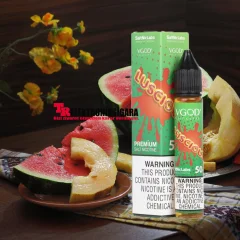
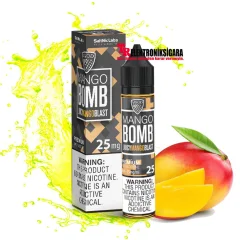
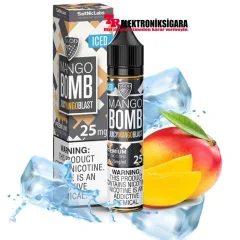
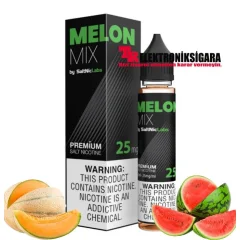
Salt E-Liquid refers to electronic cigarette liquids that use a form of nicotine protonated with an organic acid, unlike the Freebase form of nicotine. Also referred to as "Nicotine Salt" or "Nic Salt", the word Salt in these products defines the chemical form of the nicotine rather than a flavor variety.
Acids are not used instead of nicotine in salt e-liquids. Basically, nicotine and one of benzoic acid, lactic acid, levulinic acid, or another suitable organic acid are present in the same formulation, and a significant portion of the nicotine converts into the protonated form.
Since this chemical structure enables high nicotine concentrations to be used with a throat hit that differs from Freebase nicotine, salt e-liquids are nowadays strongly associated with pod and MTL devices. However, being Salt or Freebase alone does not determine device compatibility; the nicotine level, VG/PG ratio, coil, and device power must be evaluated together.
Salt E-Liquid is a type of e-liquid containing nicotine salts. Nicotine salt emerges as a result of protonating Freebase nicotine with a suitable organic acid in the same formulation.
The term "salt" here does not mean table salt or sodium chloride. Nor does it mean the product has a salty taste.
From a chemical perspective, for example, when Freebase nicotine and benzoic acid come together, proton transfer can take place, forming a nicotine benzoate system containing the protonated form of nicotine and the benzoate ion.
In short: In salt e-liquid, nicotine is not eliminated and replaced by acid. The acid helps form protonated nicotine by changing the chemical form of the nicotine.
Freebase nicotine is a basic-character molecule. When an appropriate amount of organic acid is added to the formulation during salt e-liquid production, the proton released from the acid can bind to the nicotine molecule.
As a result, a significant portion of the nicotine in the liquid exists in the protonated form.
The organic acid that can be used is not limited to just a single type. Commercial nicotine salt formulations may feature the following acids:
Which acid is used may vary depending on the manufacturer's formulation. In recent research, benzoic and lactic acids are among the most frequently encountered options in commercial products.
Not all salt e-liquids are produced with salicylic acid.
Although some older explanations stated that nicotine salt was directly created using salicylic acid, this does not accurately describe the salt e-liquid category.
Salicylic acid is merely one of the organic acids identified in certain commercial nicotine salt formulations. Different options such as benzoic acid, lactic acid, and levulinic acid can also be used.
Therefore, the definitive way to learn what acid is used in a salt e-liquid is to examine the product's manufacturer technical information.
Benzoic acid is one of the organic acids commonly used in the production of nicotine salts.
When Freebase nicotine and benzoic acid come together, a nicotine benzoate system featuring the protonated form of nicotine and the benzoate counter-ion can be formed.
However, making a definitive equation such as "Salt E-Liquid = liquid with benzoic acid" is also incorrect. Different brands may use different organic acids or different acid combinations.
It is the type of e-liquid where a significant portion of the nicotine is in the protonated form. It is frequently encountered especially with higher nicotine concentrations and low-power pod/MTL systems.
Due to the use of organic acid in salt products, different pH and sensory characteristics can occur compared to Freebase formulations.
It is the type of e-liquid where the classic Freebase form of nicotine is used. It can be prepared in various options ranging from very low nicotine levels to higher values.
Particularly low-nicotine and high-VG Freebase liquids are widely used in sub-ohm and DTL devices.
The main difference between Salt and Freebase is not flavor. For example, the exact same mango, strawberry, tobacco, or dessert aroma can be produced with both Salt and Freebase formulations.
One of the significant differences between Freebase nicotine and salt nicotine is the pH and protonation state of the formulation.
In salt formulations prepared with an organic acid, a larger proportion of the nicotine can exist in the protonated form, which can reduce the perceived harshness compared to Freebase nicotine, particularly at higher nicotine levels.
For this reason, salt products frequently appear with formulations that enable high nicotine levels to be used with low-power devices.
However: Saying "Salt causes zero throat hit" is incorrect. Throat hit is affected by many variables such as nicotine level, used acid, flavor, PG ratio, menthol/coolant, device power, coil, and user-specific sensitivity.
Being Salt does not automatically mean having high nicotine. Low-nicotine salt products can also be produced.
Nevertheless, because salt technology allows high nicotine concentrations to be used with a different sensory character, many Nic Salt products on the market have a higher nicotine level than classic high-power Freebase products.
For example, across different international markets, very diverse salt options such as 5mg, 10mg, 20mg, 25mg, 35mg, and 50mg can be encountered.
Which nicotine levels can be offered for sale also varies according to country regulations. Therefore, a nicotine value common in one country may not be found in another market.
The value indicated as mg/ml on a salt e-liquid expresses the amount of nicotine in each milliliter of the liquid.
This figure is not flavor intensity, VG ratio, or the amount of acid used.
For instance, even if two salt products labeled 20mg/ml and 50mg/ml share the same flavor and the same VG/PG ratio, their nicotine concentrations differ.
However, the nicotine concentration in the bottle alone does not precisely show how much nicotine the user will intake. Device power, coil design, puff duration, puff count, and the amount of liquid consumed can affect the amount of nicotine taken in via aerosol.
In some salt products, the nicotine level may be indicated as mg/ml, while in others it may be shown in percentage format.
Therefore, it is important to check the unit used on the label when comparing products.
Especially in products coming from different country markets, the same nicotine level can be expressed with different labeling formats. Checking the direct mg/ml value prior to purchase makes comparison easier.
Salt e-liquids are strongly associated with low-power pod systems and MTL electronic cigarettes.
The main reason for this is that many salt products have high nicotine concentrations, and low-power operating devices aerosolize less liquid per puff compared to high-power sub-ohm systems.
MTL stands for "Mouth To Lung" inhalation style. Pod systems operating with tighter airflow and lower power are widely used with salt e-liquids.
For broader information regarding MTL systems, explanations in the MTL Atomizer category can also be reviewed.
The answer to this question depends on the product's nicotine level and the technical specifications of the device.
Using high-nicotine salt e-liquids with high-power, high-liquid-consuming sub-ohm devices can lead to significantly more nicotine being aerosolized in the same amount of time.
For this reason, high nicotine concentration Nic Salt products are generally intended for low-power pod and MTL systems.
However, salt formulations with low nicotine levels can also be found on the market. Therefore, definitive device compatibility should not be determined solely based on the word "Salt."
The most accurate approach: Nicotine level, VG/PG ratio, coil resistance, recommended wattage range, and device manufacturer recommendations should be checked together.
The amount of aerosol produced by an electronic cigarette varies with power, coil, and inhalation style.
Since high-power systems can vaporize more liquid in a single puff, the total amount of nicotine that can be ingested when used with a high nicotine concentration product can also increase significantly.
This is one of the primary reasons why low-power pod systems are commonly paired with high-nicotine salt products.
Therefore, when choosing a device, not only should the coil be labeled as "salt compatible," but the nicotine level of the liquid used is also important.
There is no single mandatory VG/PG ratio for salt e-liquids.
A 50VG/50PG ratio is encountered in numerous pod- and MTL-focused salt e-liquids on the market. The reason for this is that balanced viscosity can facilitate liquid wicking in many small coils and pod systems.
However, salt nicotine does not have to be 50/50. Salt products can also be produced in 60VG/40PG, 70VG/30PG, or different ratios.
When selecting the VG/PG ratio, the pod or coil manufacturer's recommendation should be taken as the basis.
No. Salt and 50/50 are different concepts.
Salt defines the form of the nicotine; 50VG/50PG defines the VG and PG ratio of the liquid.
A product can be 50VG/50PG Salt. Another product can also be 50VG/50PG Freebase.
Therefore, a liquid being 50/50 does not indicate that it is Salt.
Salt E-Liquid and Premium E-Liquid are not the same technical category.
Salt is a chemical term defining the nicotine form. "Premium," on the other hand, is a commercial expression used in the e-liquid industry for quality, brand positioning, or recipe structure, but it lacks a fixed technical standard.
A premium brand can produce a salt product or offer the same flavor as both Salt and Freebase.
For broader information, the Premium E-Liquid category can be examined.
Nicotine salt is not limited only to specific flavors.
Current salt products can feature very diverse flavor families alongside fruits such as mango, strawberry, watermelon, apple, grape, and berry, as well as cola, lemonade, candy, cookie, dessert, coffee, tobacco, and menthol.
Since the exact same flavor can be produced as both Freebase and Salt, the nicotine form should not be guessed from the flavor name.
For broader flavor options, the E-Liquid Flavors category can also be reviewed.
The presence of expressions like Ice, Iced, Cool, Freeze, or Fresh in a salt product name expresses the cooling character in the flavor profile, not the nicotine salt structure.
A salt product does not have to be Ice, nor does an Ice-flavored product necessarily have to be Salt.
For example, even if Mango Salt and Mango Ice Salt share the same nicotine form, they can differ in terms of their cooling character.
It should also be remembered that the expression Ice does not always mean mint or peppermint taste. In some formulas, cooling can be created with different cooling agents instead of mint flavor.
For broader information regarding cool flavor profiles, the Fresh E-Liquid category can also be reviewed.
In comparing salt and freebase nicotine, giving a definitive "faster" or "stronger" conclusion solely based on the chemical form is not accurate.
Current research has shown that even with the same device and the same nicotine concentration, the salt formulation can create a different nicotine delivery than the Freebase formulation.
Nevertheless, actual nicotine intake is the combined result of many factors such as liquid concentration, nicotine protonation rate, used acid, device power, coil design, and the user's inhalation style.
Therefore, single-sentence generalizations such as "Salt = absorbed faster" are technically incomplete.
It is not correct to use expressions like "healthy," "harmless," or "risk-free" for salt e-liquids.
Salt products containing nicotine contain addictive nicotine. The output produced by an electronic cigarette is not merely "water vapor"; aerosol is formed by heating the liquid.
The fact that salt nicotine has different chemical and sensory characteristics compared to Freebase nicotine does not automatically make it a better product in terms of health.
Nicotine warning: Nicotine is addictive. Liquids containing nicotine should be stored out of reach of children and pets.
Salt e-liquid is a flavor or nicotine formulation, and within this category, no definitive health claim should be made that products help quit smoking.
Decisions regarding electronic cigarette and nicotine use cessation or health evaluations should be handled through current guidelines from health professionals and relevant health authorities rather than product marketing text.
The best Salt E-Liquid is not the same product for every user.
Instead of looking solely at brand or flavor popularity when choosing a salt, the following criteria should be evaluated:
Particularly in high-nicotine products, an evaluation such as "higher mg is better" should not be made.
It is not possible to determine a suitable nicotine level in salt e-liquids with a single figure for all users.
The required amount of nicotine can vary depending on the individual's current nicotine usage, the amount of aerosol produced by the device, frequency of puffs, and the product.
In particular, choosing high nicotine values solely based on the assumption that it is stronger is not correct.
Since the total nicotine delivery created by the same mg/ml value changes when the device is changed, the power and coil specifications of the new device should be taken into account.
Although salt e-liquids generally feel smoother compared to high-nicotine Freebase formulations, not every salt product has to be smooth.
Harshness or throat discomfort can be related to the following reasons:
Vapor, or more accurately aerosol volume, is related to device power, coil, airflow, and VG/PG ratio much more than whether the nicotine is Salt or Freebase.
Since many high-nicotine salt products are used in low-power pod devices, producing less aerosol compared to high-power DTL systems is common.
However, this situation does not mean "salt nicotine produces no vapor."
Coil life is not determined solely by the salt or freebase nicotine form.
Flavor intensity, sweetener amount, VG/PG ratio, device power, coil structure, and usage frequency can affect the residue that may form on the coil and the usage duration.
Therefore, generalizations without brand and formulation distinction such as "salt e-liquid burns coils" or "salt e-liquid extends coil life" should not be made.
Technically, a product containing no nicotine cannot truly contain nicotine salts.
Because the expression Nic Salt or nicotine salt defines the protonated chemical form of nicotine.
If a product contains 0mg nicotine, its flavor and VG/PG structure may resemble salt products, but if it contains no nicotine, it should not be evaluated as a product containing "nicotine salts."
When examining buy salt e-liquid options, it should be ensured that the nicotine level is selected correctly.
Since different variants of the same brand and the same flavor in 10mg, 20mg, 25mg, or higher can exist, selection should not be made solely based on packaging color or flavor name.
The nicotine value in the product title, VG/PG ratio, bottle volume, and Salt designation should be checked.
To compare different liquid types, general information in the E-Liquids category can also be reviewed.
Salt e-liquid varieties differ not only by nicotine level but also by flavor, VG/PG ratio, used nicotine salt formulation, and cooling character.
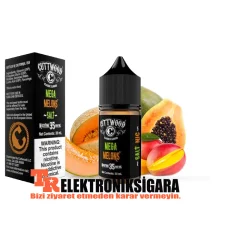
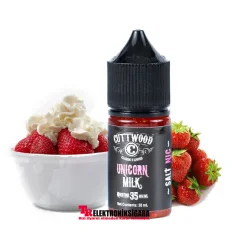
In fruit salt products, options such as mango, strawberry, watermelon, melon, grape, apple, raspberry, and tropical mix can be encountered.
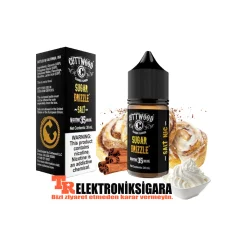
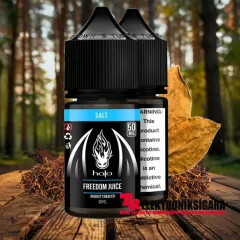
On the dessert side, cookie, custard, caramel, vanilla, and cream profiles; in the beverage group, lemonade, cola, and soda; in the tobacco group, classic and flavored tobacco; and in the fresh category, menthol and Ice options can be found.
Nowadays, numerous international e-liquid manufacturers have a salt series.
Just as it is common for the same brand to re-prepare classic Freebase flavors with a salt formulation, different recipes specifically targeted at salt products can also be developed.
In brand comparison, it will be more accurate to look not only at the number of flavors, but also at the clear indication of product nicotine values, the presence of VG/PG information, and the consistency of bottle and manufacturer information.
To examine different manufacturers, the E-Liquid Brands category can also be used.
Salt e-liquid prices can vary depending on the brand, bottle volume, product series, flavor type, nicotine level, and supply conditions.
Comparing two products of different volumes solely based on their bottle price can be misleading. The ml quantity and technical specifications of the product should also be evaluated together.
Price differences can also be seen between different salt series of the same brand or different nicotine levels.
When researching cheap salt e-liquid, rather than focusing solely on the lowest retail price, it is important to look at the exact technical information of the product.
Especially in products with uncertain nicotine values, missing VG/PG information, or inconsistent manufacturer and product details, low price alone should not be the purchase criterion.
Direct price comparison of two salt e-liquids whose bottle volume, flavor, nicotine level, and product variant are not equal may also not yield accurate results.
When salt e-liquid prices and varieties are examined, different nicotine levels, fruit and dessert flavors, tobacco profiles, mentholated or Ice options, and different VG/PG ratios can be encountered.
The most important point in salt e-liquid is not only finding the favored flavor, but ensuring that the nicotine concentration of the product and the technical structure of the electronic cigarette device to be used are compatible with each other.
You can examine available products together within the TRELEKTRONİKSİGARA Salt E-Liquid category; by comparing the flavor profile, nicotine level, VG/PG ratio, bottle volume, and other product features, you can evaluate suitable options for your device and flavor preference.